
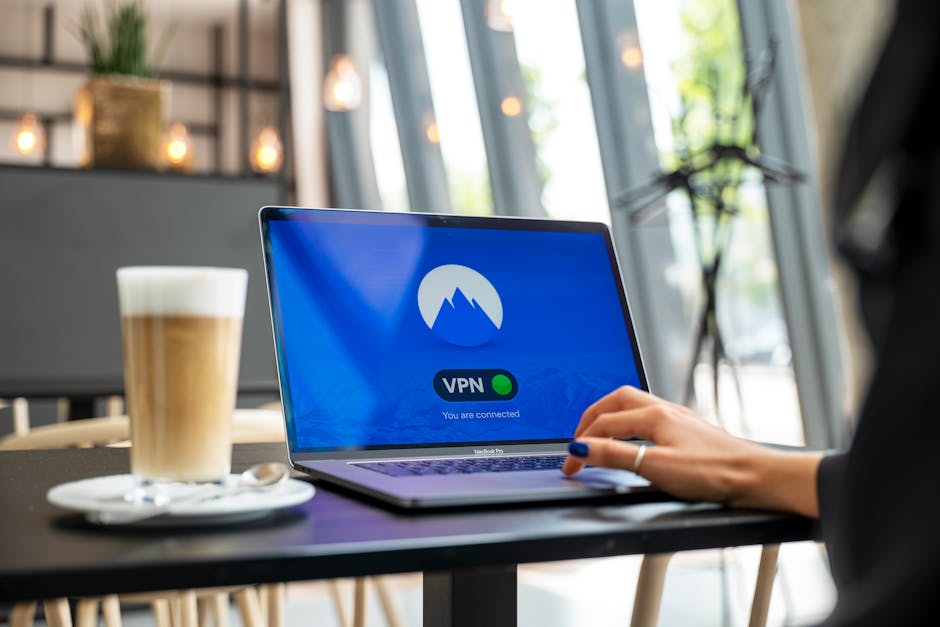
 VPN software sits on a wooden desk with a notepad and plant offering a secure workspace vibe.” style=”width:100%;height:auto;border-radius:8px;” loading=”lazy” />
In early 2024, IBM’s Cost of a Data Breach Report again showed that breach costs remain painfully high, while CISA continues warning that stolen credentials, exposed browsing data, and poorly secured remote access remain common attack paths. That matters because many buyers still ask a simple question: is NordVPN actually worth paying for when browsers, antivirus suites, and free privacy tools already exist?
The short answer is that NordVPN remains one of the stronger mainstream VPN options for users who want a broad feature set, fast performance, and a polished app experience. The harder answer is whether those strengths justify its price, limits, and marketing claims in a crowded market.
Key Takeaways: (don’t skip this) NordVPN stands out for strong encryption, independently audited no-logs claims, large server coverage, and consistent speed results in third-party reviews. Its value improves on longer plans, but buyers should weigh renewal pricing, feature overlap with other security tools, and whether they truly need extras such as Threat Protection Pro, Meshnet, or dedicated IP options.

Why NordVPN still gets serious attention
NordVPN is not just another generic VPN app with a map interface and a big “connect” button. It has spent years building a broader privacy stack around the core VPN product, including malware blocking, tracker reduction, password tools, dark web monitoring in some plans, and specialty servers for tasks like double VPN routing and peer-to-peer traffic.
From a research perspective, that matters because consumers are no longer buying VPNs only for streaming access. Many buyers now want protection on public Wi-Fi, reduced ISP visibility, safer remote work sessions, and a simpler way to reduce data collection across devices.
NordVPN also benefits from strong brand recognition, regular third-party mentions from outlets such as PCMag and TechRadar, and security-focused documentation that is easier to understand than many competitors’ support libraries. That does not make it automatically the best fit, but it does explain why it remains near the top of many shortlists.

What you get for the price
NordVPN’s value depends heavily on which plan length you choose. Like many VPN providers, it uses aggressive introductory discounts and noticeably higher renewal pricing, so the monthly cost on paper can be misleading if you only look at the headline number.
The table below summarizes widely cited product details and typical plan structure seen on official materials and major review roundups. Pricing and server counts change regularly, so these figures should be treated as directional rather than permanent.
| Category | NordVPN |
|---|---|
| Headquarters | Panama |
| Approximate server network | 6,000+ servers in 100+ countries |
| Encryption | AES-256, ChaCha20 via NordLynx/WireGuard-based setup |
| Protocols | NordLynx, OpenVPN, IKEv2/IPsec |
| Simultaneous connections | Up to 10 devices |
| Core privacy features | Kill switch, DNS leak protection, no-logs policy, split tunneling on select platforms |
| Extra features | Threat Protection, Meshnet, Double VPN, Onion Over VPN, dedicated IP add-on |
| Plan Type | Typical Intro Pricing | What to watch |
|---|---|---|
| Monthly | Usually around $12.99 to $14.99/month | Highest cost, best only for short-term use |
| 1-year plan | Commonly around $4.99 to $6.99/month equivalent | Better value, but renewal may rise sharply |
| 2-year plan | Often around $3.39 to $4.99/month equivalent | Best headline value, longest commitment |
If you plan to keep a VPN for more than a few months, NordVPN becomes much easier to justify on a 1-year or 2-year deal. If you prefer flexibility or often switch tools, the monthly plan is significantly less attractive.

How NordVPN performs on speed and reliability
Speed is where NordVPN usually performs best in comparative coverage. Review labs and tech publications frequently place it near the top tier, especially when using NordLynx, the provider’s WireGuard-based protocol designed to improve throughput without sacrificing too much security overhead.
Public review results vary by region and ISP, but a common pattern appears: local server speed retention often lands around 80% to 90% of baseline on high-quality broadband connections, while long-distance connections can still remain usable for 4K streaming, video calls, and large downloads. PCMag and several independent reviewers have regularly reported strong download performance relative to OpenVPN-heavy competitors.
That said, speed claims need context. A user with fiber in Seoul, London, or New York will not see the same results as someone on congested hotel Wi-Fi or mobile tethering. VPN speed is heavily affected by server distance, routing quality, protocol choice, and local network health.
| Scenario | Typical Publicly Reported Result | Impact |
|---|---|---|
| Nearby server with NordLynx | 80% to 90% speed retention | Usually fast enough for streaming, gaming, and large downloads |
| Cross-continent server | 50% to 75% retention | Still usable, but latency rises and uploads may dip |
| OpenVPN connection | Lower than NordLynx in most reports | Useful for compatibility, not always best for speed |
| Specialty servers | Often slower than standard servers | Privacy gains may come with a performance tradeoff |
For most buyers, this means NordVPN is usually worth it if performance is a major factor. It is rarely the cheapest mainstream VPN, but it consistently avoids the slow, unstable experience that makes many low-cost VPN subscriptions frustrating.

Security features that actually matter
Marketing pages often bury the most important question: which features change your real-world risk? NordVPN does better here than many rivals because several of its headline features map to actual user problems rather than invented jargon.
Encryption and protocols
NordVPN supports strong modern standards, including AES-256 and WireGuard-derived NordLynx. For most users, that is more than enough for everyday browsing, banking, and remote work, assuming the endpoint device itself is not compromised.
No-logs and audits
A VPN saying “we keep no logs” is not enough on its own. NordVPN’s privacy claims have been reviewed through independent audits over multiple years, which is a stronger signal than self-published promises. Buyers should still read scope details carefully, because audits are snapshots, not permanent guarantees.
Kill switch and leak protection
A kill switch matters more than flashy map graphics. If a VPN disconnects and your traffic silently falls back to the open internet, your ISP visibility and IP exposure return immediately. NordVPN includes kill switch protection and DNS leak controls, which are core features any paid VPN should offer.
Threat Protection and blocking tools
NordVPN’s security extras can improve value for users who do not already run a strong privacy stack. Blocking malicious domains, reducing trackers, and flagging risky downloads can add practical protection, though these features should not be treated as a full replacement for dedicated endpoint security validated by labs such as AV-TEST.
In plain terms, NordVPN’s security package is strongest when you want one subscription to cover several privacy basics. If you already use hardened DNS, tracker blockers, and security suites, the extras may feel less essential.
Where NordVPN is worth the money
NordVPN is easiest to recommend to three kinds of users. The first is the everyday privacy buyer who wants one reputable tool that is simple to install, fast enough to leave on, and broad enough to use across phones, laptops, and tablets.
The second is the traveler or remote worker using hotel, airport, café, and coworking networks. Public Wi-Fi remains a risk zone for opportunistic surveillance, session hijacking attempts, and poor router hygiene. A stable VPN with kill switch protection reduces exposure in those environments.
The third group is users who want more than location masking. Meshnet, dedicated IP access, multi-hop options, and malware-blocking extras make NordVPN more compelling for people who work across devices or want finer control over their connection model.
So what does this actually mean for you?
- Good value for: travelers, remote workers, privacy-focused households, frequent streamers, people who want a polished all-in-one app
- Less compelling for: users who only need a VPN once or twice a month, advanced tinkerers who prefer cheaper minimalist tools, budget buyers unwilling to accept renewal hikes
Where NordVPN falls short
No honest review should ignore the tradeoffs. The biggest complaint is pricing transparency over time. Intro discounts are strong, but renewal pricing can be high enough that a “great deal” becomes an average or expensive one unless you actively manage your subscription.
Another issue is feature overlap. NordVPN bundles more tools than many rivals, but that does not automatically create more value. If you already pay for antivirus, password management, secure DNS, and tracker blocking, some included extras may duplicate what you have.
There is also the question of trust concentration. A VPN can help reduce ISP visibility and insecure-network risk, but it does not make you anonymous, and it does not erase browser fingerprinting, account tracking, or malware on your device. CISA and other security agencies repeatedly emphasize layered defense for a reason.
- Renewal pricing can sting if you forget to review your plan at the end of the discount period.
- Specialty features add complexity that many casual users will never touch.
- No VPN solves everything; account security, patching, MFA, and safe browsing still matter more.
Is NordVPN better than free VPN options?
For most security-conscious users, yes. Free VPNs often impose severe speed caps, data limits, small server networks, intrusive logging practices, or vague business models that depend on aggressive monetization. That does not mean every free VPN is unsafe, but the category as a whole requires much more skepticism.
NordVPN’s advantage is less about magic and more about business model clarity. A paid subscription gives the provider a direct revenue stream, making it easier to justify audited claims, larger server fleets, faster infrastructure, and ongoing app development.
That is especially relevant for users handling sensitive work, frequent travel, or regular cross-border browsing. When privacy and stability are recurring needs rather than rare events, a reputable paid VPN usually makes more sense than rotating through inconsistent free options.
The honest verdict: is NordVPN worth it in 2025?
For many buyers, yes, NordVPN is still worth it—but only under the right expectations. It is worth paying for if you want a fast mainstream VPN with audited privacy claims, solid core security features, a broad server footprint, and useful extras that go beyond simple IP masking.
It is less worth it if you are only chasing the lowest monthly cost, if you already have overlapping security tools, or if you expect a VPN to deliver complete anonymity. The product is strongest as part of a broader privacy setup, not as a silver bullet.
If the decision comes down to value, the most rational approach is this: choose a discounted longer-term plan only if you expect regular use, set a reminder to review renewal pricing before auto-renewal hits, and verify which bundled features you will actually use. On those terms, NordVPN remains one of the more defensible paid VPN purchases on the market.
This is informational content. Always verify current features and pricing on official websites.
You May Also Like
- How WireGuard Boosts Mobile VPN Speed on Android
- Why Basic Privacy Advice Fails — What Experts Recommend
- Does a Free VPN Actually Protect Public Wi‑Fi?
FAQ
Is NordVPN good enough for public Wi-Fi security?
Yes, for most users it is a strong option for reducing exposure on public networks. Features such as encryption, kill switch protection, and DNS leak controls make it well suited for hotel, airport, and café use.
Does NordVPN slow internet speed too much?
All VPNs reduce speed to some extent, but NordVPN usually performs well in third-party reviews, especially with NordLynx. Nearby server performance is often strong enough for streaming, conferencing, and large downloads.
Is NordVPN’s no-logs claim trustworthy?
It has more credibility than unaudited marketing claims because independent audits have reviewed key privacy assertions. Still, buyers should treat any audit as evidence, not absolute proof, and monitor updated reports over time.
Should you buy NordVPN monthly or long term?
The monthly plan is convenient but expensive. For users who expect regular VPN use, longer plans generally offer better value, though checking renewal pricing before subscribing is essential.
Sources referenced: CISA guidance on cyber hygiene and secure access, IBM Cost of a Data Breach Report, AV-TEST product evaluation frameworks, PCMag VPN performance and feature comparisons, and NordVPN official plan and feature documentation.
📌 You May Also Like